
What professionals need to understand in 2025 and beyond
Introduction
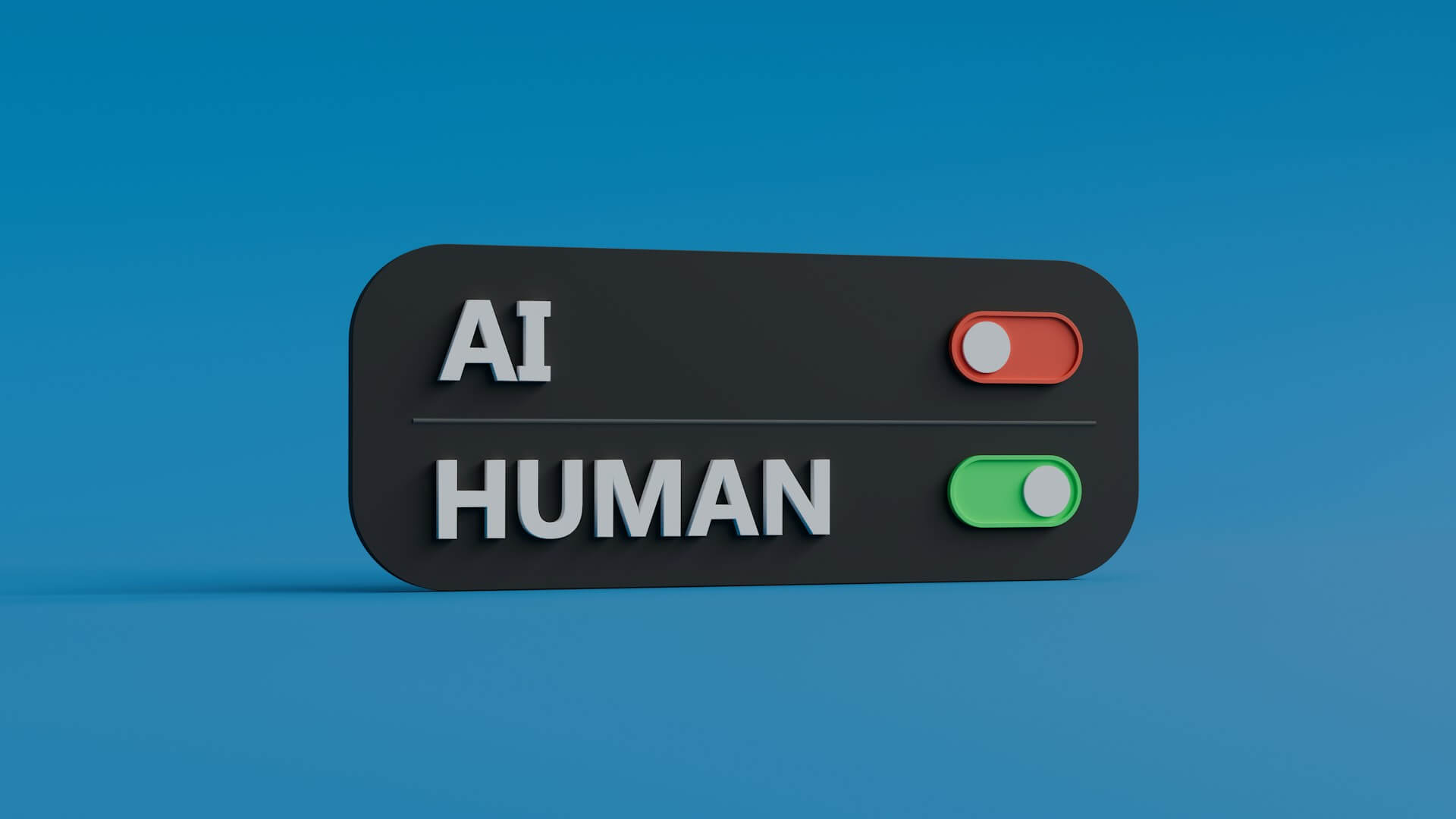
AI vs. Human Creativity: Can Machines Really Innovate? Advances in artificial intelligence have progressed to the point where it composes stories, invents logos, generates videos, composes music, and creates detailed business plans. So, this raises the seminal question: can machines innovate, or are they just remixing what is already created by human beings?
For those seeking to make sense of this moment as professionals working in the digital economy—marketers, entrepreneurs, designers, strategists—understanding the relationship between AI and human creativity is no longer an optional framework and will define how teams co-create, how industries evolve, and where the next competitive advantage might lie.
This article will consider both the advantages and weaknesses of AI creativity as it relates to examples of practices in actual industries, perspectives from creative domain experts, and practical ways that professionals can interact with AI in collaborative endeavors and human-inspired outcomes for innovation and practice.
The Creative Advantages of AI: Speed, Scale, and Expanding on Ideas
1. AI creates ideas faster than humans
AI tools are creating dozens of creative options for design, headlines, scripts, and concepts in seconds, using tools like ChatGPT, Claude, Midjourney, Runway, etc.
Example:
A startup company generated more than 150 variations for its product packaging within a few hours on an afternoon; it would have taken a team of designers weeks of planning time to do the same task.
Perspective from professionals:
AI speeds up the initial phase of the brainstorming process, so teams can review more ideas before committing to a creative outcome.
2. AI can identify patterns and recombine them for the purpose of inventiveness
It stands to reason AI creativity is grounded within databases, analyzing established patterns, then framing them in new forms.
Applications of AI creativity:
Marketing teams will create slogans from hard data;
Architects will create solutions for structures, from all designs based on thousands of buildings;
Musicians will create new soundscapes that combine original or mixed genres.
Perspective:
As it is a recombination of different patterns, AI will present ideas in a potentially inventive way, or at least an option that does not feel predictable—expanding the options of human creativity.
3. AI does not experience tired, blocks, or biases similarly to humans do
Professionals are experiencing fatigue based on the cyclical process of creative thinking; the output based on AI platforms or other AI tools will produce multiple draft options with minimal fatigue from the effort of humans, which maintains productivity in an already busy production year or time.
Example:
Content companies are using AI to create all first drafts and subsequent drafts that go in multiple directions. AI is generating numerous draft options while reducing cognitive block options for the human burden of work.
Where AI Lacks: Intent, Emotion, and Original Thought
1. AI is not your lived experience
Human lived experience generates creativity from memories or struggle or emotion in a way that an algorithmic model cannot replicate.
Example:
AI generates poetry in the style of Maya Angelou by analyzing her work—the AI does not have a historical lived situation to draw from, and even if that lived experience reflected emotion, the AI would not have it.
Takeaway:
Professionals need to remember that AI creates based on the prompt being requested; therefore, any material generated by AI is no substitute for how human beings refine the material based on emotional influences or the nature of the brand, which will require a human touch.
2. AI does not create its own creative practices
AI responds to the necessary requested prompts; AI does not initiate its own creative practices, intent, nor vision.
Observations from experienced creative agency directors:
AI generated a logo for a pressure-fit model that, with defined input, could be a beautiful design. But you are limiting the brand identity; previous to the proposal of the AI, the mission, values, and story predated the prompt that satisfies the job.
3. AI has a hard time breaking through originality
While artificial intelligence can remix ideas with tremendous sophistication, it still takes a leap from a human to make breakthrough innovation happen.
Historical context:
The smartphone, the idea of watching something you think you’d like on a streaming platform, or the idea of driving an electric vehicle, were all human leaps—not statistically predicted.
Expert Perspectives: What Business Leaders Are Saying About AI and Creativity
Harvard Business Review
Studies show that AI expands possibilities for creativity with humans directing the creativity. Teams collaborating with AI create more ideas with higher quality than without AI—but only if the humans remain the creative directors.
MIT & Wharton Research
AI didn’t simply produce better creative outputs. In fact, AI outputs often lacked depth and sophistication when produced without human input. After experimenting with AI, the top work was produced by a human and AI hybrid team.
Industry leaders:
Design agencies using AI highlighted:
- Testing concepts faster
- Costs lower to get to creative production
- More variation in creative exploration
But also consistently highlighted that emotional storytelling and brand strategy still take a human.
Case Studies to Support Applications
Case Study 1 – Nike AI
Nike is using AI to generate sneaker concept designs based on athlete performance data, which designers then create sneakers that are potentially iconic products.
Outcome – Design cycles shortened by over 30%, and the number of innovative prototypes increased 30-fold!
Case Study 2 – Coca-Cola’s AI Marketing Campaign
Coca-Cola invited a collective of creators to enter an ad campaign using AI tools (ChatGPT and DALL·E) to create advertising concepts for Coca-Cola. The winning concepts combined human storytelling with the visual inspiration from an AI.
Outcome—An engaged and expanded audience of adaptive branded stories and applicable outcomes, with a global engaged audience. The first examples of successful AI creativity combining both AI and human creativity would arise out of this campaign.
Case Study 3 – Transformations in Film Production Using Runway Gen-3
Independent film creators are using AI video generation to create their scenes, storyboards, and visual effects.
Outcome – Made lower-budget independent films now able to compete visually with studio films.
How Professionals Can Combine AI + Human Creativity for Maximum Success and Impact
1. Think AI for ideation—humans for creating direction/vision!
- Let AI generate prompts, options, and concept variations.
- Let humans decide to to take inspiration from the AI and decide in what direction to take which idea/concept variation.
2. Build creative workflows that emphasize AI doing the heavy lifting.
- First drafts
- Visual concepts variation
- Layouts, colors, prototypes
- Competitive Research
- Keyword/content clustering
3. Let humans be the ones for original creativity, emotional depth and depth of storytelling in strategy creation.
- Brand identity
- Creative strategy
- Establishing messaging that creates an emotional connection
- Going through ethical decision making everyday,
- Cultural relevance
4. Assessing AI Work Outputs Through a Professional Lens
- Evaluating the accuracy of AI-produced work output
- Is the work genuinely authentic?
- Is the work on brand?
- Cultural `sensitivity?
- Is the work within legal requirements?
5. Train your team to generate better prompts
- Better prompts = better results. Professionals need to learn prompt frameworks to effectively work with AI on:
- Storytelling
- Design
- Marketing
- Business strategy
- Rewriting content
Conclusion
AI is changing creativity—but it is not going to usurp innovators! It is machines that will expand possibilities, speed things up, and eliminate repeated decisions. The spark of when true creativity—vision, emotion, sound of purpose, originality, etc.—affects creativity in a moment—all of that is a human trait!
Professionals will be at the edge of the next creative/innovation era of innovation if we can link human imagination and AI creative capacity.
Call to Action
If you would like to share your work/industry, I would be happy to devise a custom AI and human creativity shifted workflow that specifically bolsters your work to innovate quicker and quicker.